Imdad Hussain Shah
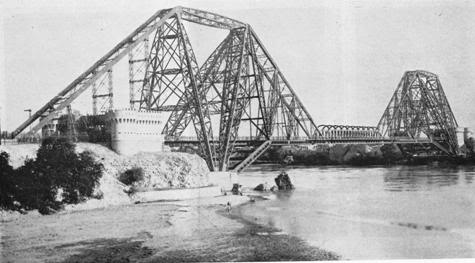
The plan to construct the bridge had been under consideration by the British Government for a long time. The Practical work began between 1872 and 1874.
The First Survey and Design:
The first survey and design were conducted by James Ramsay of the Public Works Department. He proposed a 650-foot long suspension bridge, but it was not agreed upon. Ramsay later served as the Chief Engineer of the Sindh Sagar Railway in 1880.
The Second Survey and Design:
The second attempt was made by Major General James Browne, who proposed a rigid suspension bridge with a 786-foot span using steel-linked cables. This proposal was also rejected.
About James Browne:
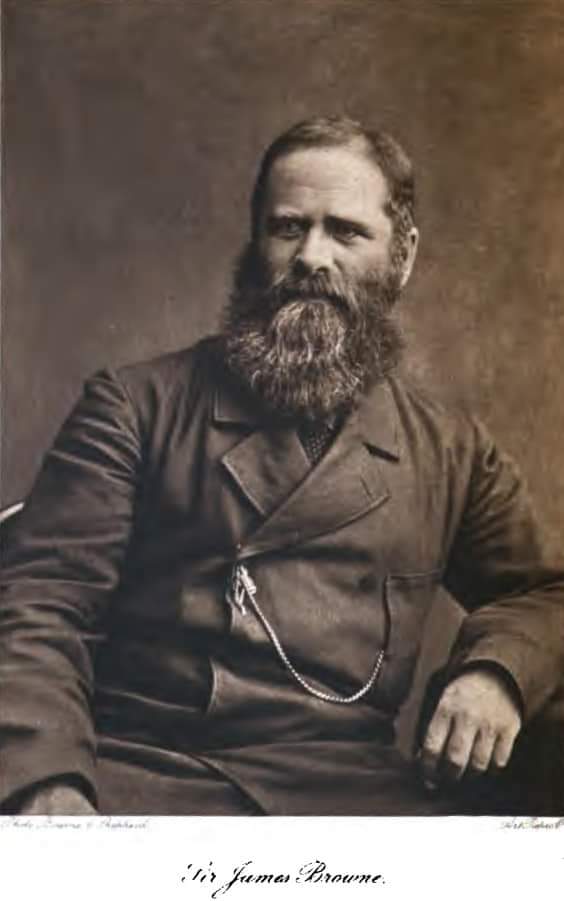
Born in France on September 16, 1839, Browne was a military engineer and administrator. He was the first British officer in India to pass the Pashto language examination. His career was distinguished:
1860: Participated in the campaign against the Mahsud Waziri tribes.
1863: Served as an interpreter in the Ambela Campaign and worked as an engineer in Kohat.
Engineering feats: He worked on fort construction in Lahore and built a 120-mile mountain road in Kangra.
1871: Spent two years in Europe and America studying iron bridge construction.
1875: Surveyed and designed the Lansdowne Bridge, but his design was rejected due to high costs, a decision he deeply regretted.
Later Career: He laid 70 miles of railway track from Sukkur to Quetta in 1876 and became Chief Engineer of the Sindh-Pishin Railway in 1884. In 1892, he was appointed the Governor-General’s Agent for Balochistan. He passed away in Quetta on June 13, 1896, and was buried in London.
An Incident During the Survey:
During the survey of the Lansdowne Bridge, Browne had a dispute with an individual from the Khairpur State. While surveying Bukkur, there was a “snag” or a tree trunk at the bridge site that obstructed the survey. A local man prevented him from removing it. In the middle of the night, Browne tied the snag to a steamer, towed it toward Bukkur Island, and sank it in the river. Despite the man’s loud protests and a formal complaint to the Collector, Browne faced no consequences after the inquiry.
The Third Survey and Design:
Sir Guilford Molesworth conducted the third survey and proposed a three-hinged arch bridge, which was also not approved. Molesworth had been a consulting engineer since 1871. During his tenure in 1888, the Indian State Railway approved 3,984 miles of track, of which 3,450 miles were laid.
The Fourth Survey and Design:
James Richard Bell presented the fourth design, proposing a parallel truss cantilever bridge with a 680-foot main span. The government rejected this as well.
Life: Born in 1841, died July 14, 1913, in Kent, England.
Legacy: Originally with the Madras Railway, he served the State Railway until his retirement in 1896. He built the Empress Bridge (Sutlej), Muttra Bridge (Jumna), and Sher Shah Bridge (Chenab). His greatest feat was laying the track from Ruk to Bolan in record time. He also worked on the Hyderabad-Umarkot line in 1890.
The Fifth and Final Design:
The fifth and final design was submitted by Sir Alexander Meadows Rendel, which was finally approved.
Specifications: The design consisted of two cantilevers, each 310 feet long and 169 feet high, with a 200-foot central span between them.
Clearance: The clearance between the river and the bridge was set at 52 feet during normal days and 35 feet during floods.
Technical Details: The ironwork weighed 33,000 tons. It featured a 15-foot roadway for traffic, and the railway gauge was set at 5 feet 6 inches.
About Sir Alexander Meadows Rendel:
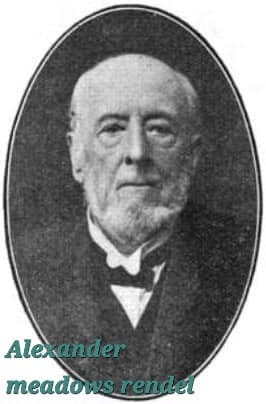
Born in Plymouth, England, in 1828, this civil engineer arrived in India in 1857. In 1870, he became a member of the commission for narrow-gauge railways and served as a consulting engineer for Indian Railways. Aside from the Lansdowne Bridge, he designed the Upper Son Bridge (Patna), Alexandria Bridge (Chenab), Hardinge Bridge (Ganges), and Empress Bridge (Sutlej). He passed away in London on January 23, 1918.
Naming the Bridge:
Initially, the structures were known as the Rohri Channel Bridge and the Sukkur Channel Bridge. Some documents referred to them simply as the Indus Bridge. Upon completion, the bridge was named the Lansdowne Bridge after Lord Lansdowne, the Viceroy of India.