Tariq Aziz Kolachi
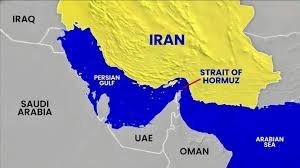
Since 28th of February, the start of the US's "Operation Epic Fury" and Israel's "Operation Roaring Lion", the situation has emerged to be a global energy and economic crisis. The direct US and Israeli attacks triggered an immediate and aggressive repulsive response from Iran, focusing on the Strait of Hormuz a 21 miles wide gap in the Persian Gulf, the world’s most sensitive energy chokepoint. The situation is gradually getting bad to worst especially after the assassination of the Supreme Leader of Iran, Ayatollah Ali Khamenei.
In response to the Israeli-US attacks, knowing the importance of one of the most important energy trade routs, the IRGC officially announced on March 2, that they will not allow any vessel especially oil ships to sail through the Strait of Hormuz and declared the Strait closed, threatening to set ablaze any vessel ignoring their warning. Until then, the oil transit has dropped by over 90%, with the exception of a few of the Chinese or Iranian-owned vessels seen passing.
As per independent analysts, approximately 150 to 300 tankers are currently anchored in open waters outside the Strait awaiting the rescinding of the closure and are unable to sail due to the total revocation of maritime insurance by the insurance companies which was officially withdrawn for the region on March 5.
Since the beginning of the conflict, at least eight commercial vessels have been struck by drones or missiles. The situation compelled the concerned shipping companies to anchor their vessels in open sea till the normalisation of navigation on this important global energy passage. Incidents of sustained GPS jamming and "denial areas" across the Persian Gulf, making navigation nearly impossible without the use of military-grade equipment.
On the one hand the U.S. is now in a direct war with Iran, while on the other hand the Houthis in Yemen have also accelerated maximum-pressure attacks in the Bab el-Mandeb, Red Sea. This has created a double-choke scenario where both major Middle Eastern gateways are essentially impassable, forcing nearly all East-West trade to reroute around the Cape of Good Hope, adding 10–14 days to global shipping times.
an estimated quantity of around 20 million barrels of oil per day nearly 20% of global consumption is transported through this pivotal global energy route and its blockage has sent shockwaves through the global energy markets. Brent crude spiked from approximately $70/barrel to over $82/barrel within the first 96 hours. Analysts from Goldman Sachs and Barclays suggest that if the blockage lasts beyond four weeks, prices could easily surpass $100/barrel to $120/barrel.
The blockade of the Strait has also halted the transportation of the 20% of the world’s Liquefied Natural Gas (LNG), primarily from Qatar. Gas prices in Europe has nearly doubled since the last week, compelling utilities to scramble for expensive alternatives from the U.S. and Africa to minimise the impact of sudden decline in imports from gulf countries. The blockage of the strait has also badly affected the production because major producers like Iraq have already begun shutting down operations at major sites like the Rumaila oil field because they have run out of the storage space for oil that cannot be shipped out.
The closure of this energy passage has not only caused unrest in European markets but few Asian countries including China are also paying the price of disrupted navigation in Persian Gulf. China imports about 45 to 50 percent of its oil through the Strait. The blockade is resulting into a manufacturing slowdown and a probable dent to the GDP of China during the current Fiscal Year.
According to few diplomatic sources, China is currently in secret negotiations with Iran to secure gurantees of safe passage for Chinese-flagged vessels. Tehran has explicitly stated that U.S., Israeli, and European ships are not allowed to sail through the Strait, while they have omitted China from the blacklist.

One thought on “Strait of Hormuz: World’s most sensitive energy checkpoint”
Comments are closed.

Amazing article and information on current affairs.